
A famous artist once said, “Learn the rules like a pro, so you can break them like an artist.” DFS players are a lot closer to artists than people think when it comes to building lineups. There are rules we all learn over time. Stack your quarterback. Correlate your lineup. Find leverage. Be different enough to win. Most of that advice has value, but the old DFS rules are incomplete.
The mistake comes when players turn advice into commandments. Once a rule becomes automatic, the lineup stops being built around the slate. It becomes built around what everyone has already been told to do. I want to challenge some of those old ideas so we can think through Milly Maker builds with more context, better discipline, and a little more freedom.
Milly Maker winners are not built by blindly following rules. They are built by knowing when the rule actually applies.

1. The field overvalues bring backs
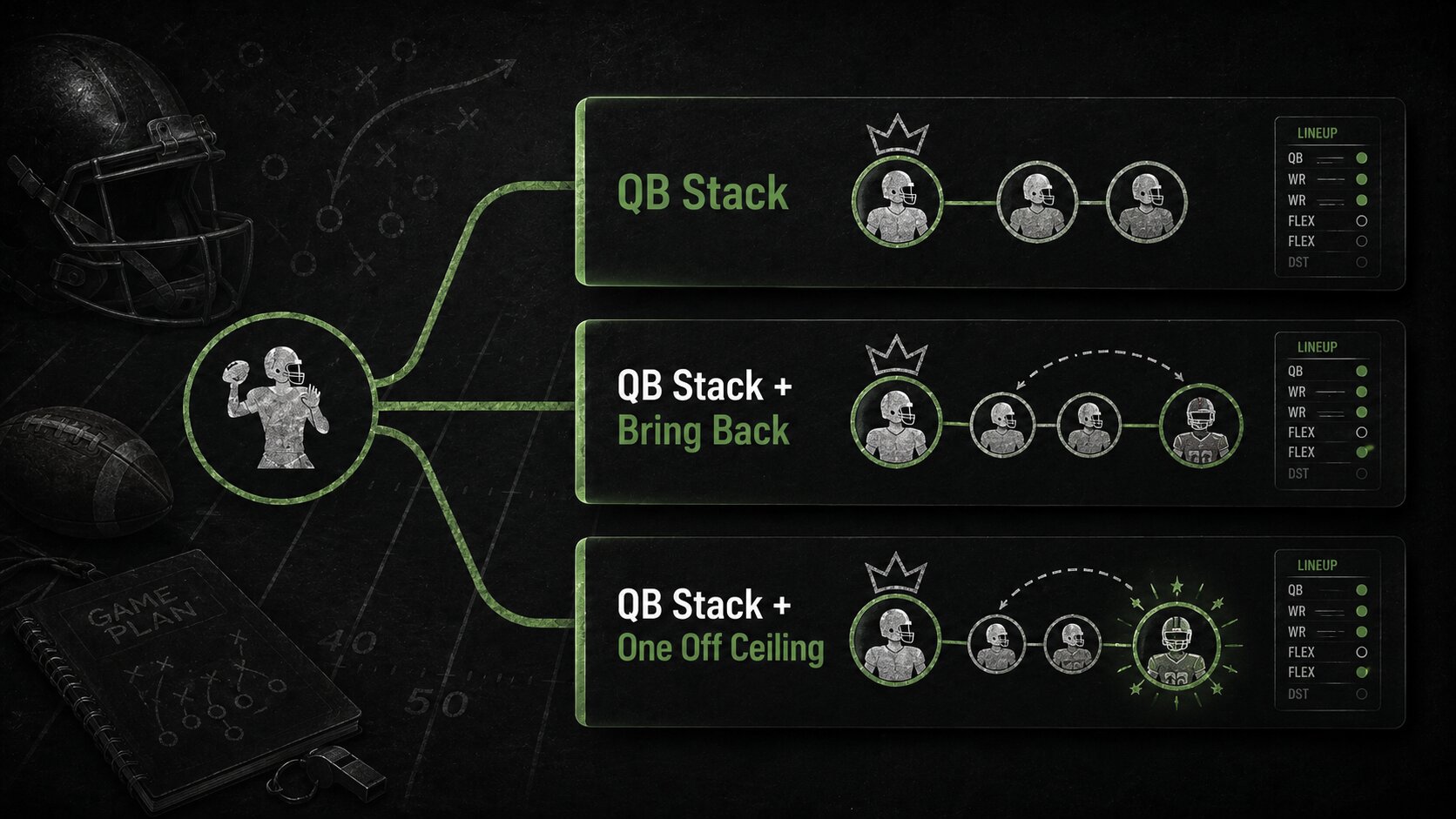
The standard advice says every quarterback stack should include a bring back from the other side of the game. The idea makes sense. If a quarterback and his pass catchers are pushing toward a ceiling game, the opposing offense often has to answer. In theory, the bring back captures the shootout script.
Trouble starts when the bring back becomes automatic. Historical Classic Milly Maker winners show enough no bring back builds to make the rule less rigid than the field treats it. A bring back should be earned by the slate. It should come from game environment, ownership, pricing, and role. It should never get added simply because an optimizer setting requires one.
A better approach starts with purpose. Is the bring back extending the game environment? Is it creating leverage off a chalky player from the same game? Is it tied to the most likely path for the stack? When the answer is unclear, the lineup may be carrying correlation without enough reason.
2. The winning QB can come from overlooked ownership ranges
Common DFS content naturally points players toward quarterbacks from obvious ceiling games. High totals, fast pace, concentrated passing trees, and strong team totals attract attention for good reason. Those quarterbacks are easy to explain and easy to click.
Large field winners often come from a different area of the board. Many winning quarterbacks land under 10 percent ownership, while only a small number reach the 20 percent plus range. This does not create permission to play random low owned quarterbacks. It shows how easily the field can overpay attention to the most comfortable quarterback plays while missing quarterbacks with a similar path to ceiling.
The winning quarterback needs enough ceiling, a reasonable stack path, a salary profile capable of opening the rest of the build, and a field misread. When those factors line up, popularity becomes less important than access to a winning score.
3. Single stacks still deserve respect
Double stacking has become one of the loudest tournament rules in NFL DFS. Quarterback plus two pass catchers can be powerful when the offense is concentrated and the game environment supports volume. It can also create bloated builds when the second pass catcher gets forced into lineups without enough ceiling or ownership purpose.
Single stacks still have a place in Milly Maker construction. Quarterback plus one can preserve salary, reduce fragility, and leave more roster spots for independent ceiling outcomes. A single stack can also make sense when the quarterback spreads production, carries rushing equity, or pairs cleanly with one clear ceiling player.
For optimizer players, this matters because double stack rules can create a large number of dead lineups across 150 entries. A double stack pool should be selective. Every quarterback does not deserve the same stacking rules. Every offense cannot support two pass catchers in a first place lineup. The second player needs a role, ceiling path, and reason to be there.
4. The FLEX spot should stay open
DraftKings full PPR scoring has made WR in the FLEX a popular tournament default. The logic is easy to understand. Wide receivers can catch long touchdowns, rack up reception volume, reach 100 yard bonuses, and break a slate without needing 25 touches.
The FLEX spot is more open than the old rule suggests. Running back has shown up slightly more often than wide receiver in the FLEX among Classic winners, and tight end appears often enough to remain part of the conversation. WR in the FLEX remains useful, although automatic WR FLEX construction can narrow a build before the slate deserves it.
FanDuel often pushes players toward running back in the FLEX because of scoring and roster dynamics. DraftKings requires more slate context. Pricing has become sharper, and salary constraints matter. A low owned tight end, an underpriced running back, or a role based value can create the salary and ownership leverage a lineup needs. The FLEX should be the last place for a lazy rule.

5. DST starts with the opposing quarterback
DST advice usually centers on sacks, pressure rate, Vegas spread, home favorite status, salary, or weather. Those factors matter, although they can lead players to focus too much on the defense and not enough on the quarterback across from it.
A meaningful share of winning DST outcomes came against backup, rookie, replacement level, or unstable quarterback situations. The defense did not always need to be elite. The opposing quarterback profile mattered. A poor decision maker, a rookie under pressure, an injured starter, or a backup forced into volume can turn an average defense into a slate winning play.
A sharper DST question asks which quarterback can collapse. Turnovers, sacks, short fields, and defensive touchdowns often come from quarterback stress. DST becomes easier to evaluate once the opposing offense gets treated as part of the play.
6. Late swap needs a strong lineup first
Late swap has value. Good DFS players should understand late swap. Problems begin when late swap gets treated as a cure for weak lineup construction.
Classic winners are not all built around massive late window exposure. Plenty of winners carry a large portion of the lineup in the early window. This is important because a lineup still needs a strong pre lock thesis. Late swap can sharpen a lineup, although it cannot rescue a build with no ceiling path, poor ownership shape, or weak salary usage.
The goal should be balance. Early window players can create the foundation. Late window players can preserve flexibility and give the lineup room to respond. The best approach bakes timing into the build without letting timing overpower player quality or slate context.
7. Unused salary needs a reason
Players often talk about leaving salary as an easy way to get unique. The concept has merit in large fields, especially when pricing funnels everyone toward the same builds. The issue is how often players treat unused salary as strategy by itself.
Most winning Classic builds spend close to the salary cap. The uniqueness usually comes from the combination of players, ownership mix, stack structure, game selection, and the way the lineup tells its story. Leaving $1,000 on the table can help when the lineup improves because of the move. It becomes harmful when the lineup loses projection and ceiling only to look different.
Salary should serve the build. If unused salary creates a better construction, cleaner leverage, or a less duplicated roster path, it has a purpose. If the only reason is fear of duplication, the lineup may be solving the wrong problem.
8. Chalk needs shape, not fear
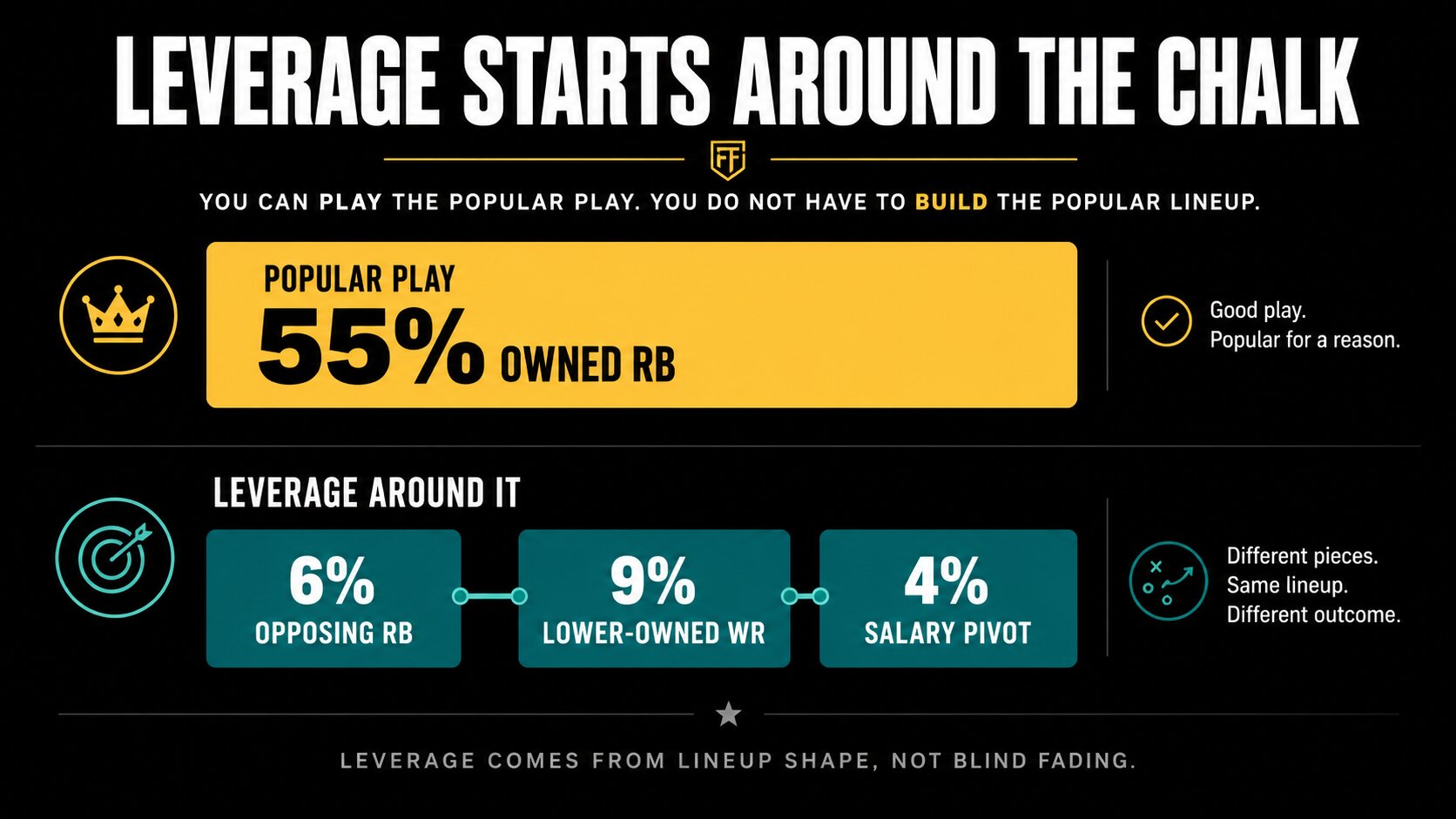
Tournament players often talk themselves into two extremes. Some eat too much chalk because the plays project well. Others fade strong plays simply because ownership is high. Neither approach gives a lineup an automatic path to first place.
Winning builds usually carry a mix of ownership ranges. Several sub 10 percent players can live beside mid owned players and one or two 20 percent plus players. The goal is ownership shape, not blanket avoidance.
One useful way to think about chalk is to let it provide access to the best point environments while finding a way to subvert the field around it. A popular backup running back stepping into a major role can be correct. The leverage might come from an opponent, a correlated player, a salary pivot, or a lower owned teammate. Chalk can move a lineup forward, although comfort across all nine spots usually makes the build too easy to duplicate.
9. Correlation has a limit
DFS culture has trained players to stack, bring back, game stack, and correlate as many roster spots as possible. Correlation matters, especially in large fields. A strong stack can create a path to a first place score with fewer independent outcomes required.
Many winning builds include running backs, wide receivers, tight ends, and FLEX players outside the main stack. These players are not mistakes. They are independent ceiling outcomes. A lineup can have one strong game thesis while still using separate one off plays with their own path to slate breaking scores.
This is where DFS becomes counterintuitive. A quarterback can throw interceptions, trail by multiple scores, and still finish as the optimal quarterback if volume, rushing, and late scoring break correctly. A running back can win through game script while the main stack wins through a different game. A lineup needs enough connection to create upside and enough independence to capture the rest of the slate.
10. Game concentration beats team counting
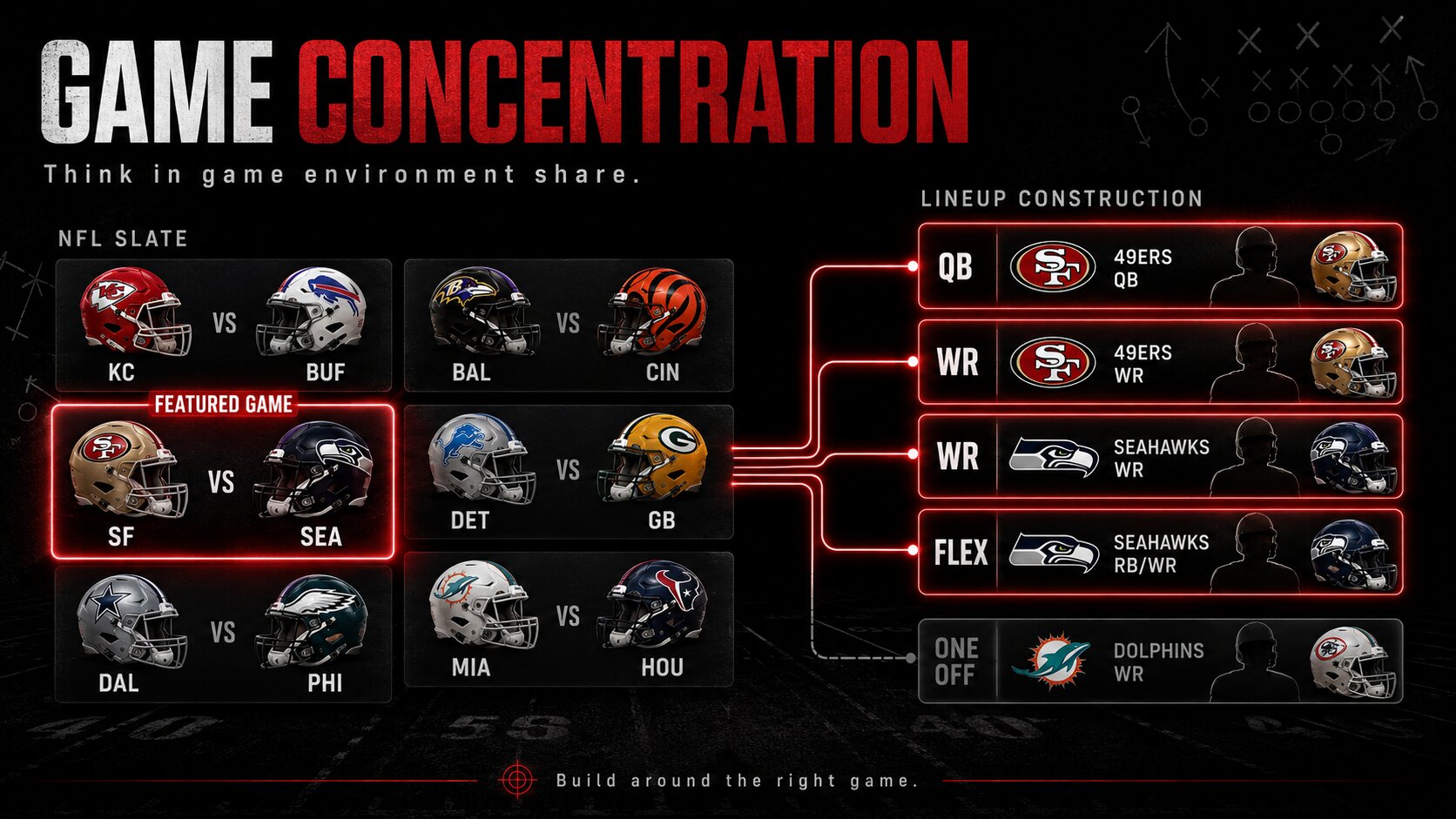
Team stacking rules dominate a lot of DFS discussion. Players ask whether they need two teammates with the quarterback, whether the running back can be used with the passing stack, or how many pass catchers are too many from one offense. Those questions matter, although game concentration may deserve more attention.
A large number of winners land in the two to four players from one game range. Some builds go higher, yet the broader lesson is about how much of a game environment the lineup captures. The focus should move from team count alone to game environment share.
The sharper question is how much of this game is needed for the lineup to win. Sometimes the answer is a clean quarterback stack. Sometimes it is a mini correlation. Sometimes it is a single player from a game the field overlooked. Team max rules help control exposure, while game max thinking helps the lineup understand where the slate can be won.
Closing thought
The strongest Milly Maker builds come from knowing which rules deserve weight on a specific slate. The edge comes from reading the slate better than the field and building lineups with purpose behind every roster spot.